
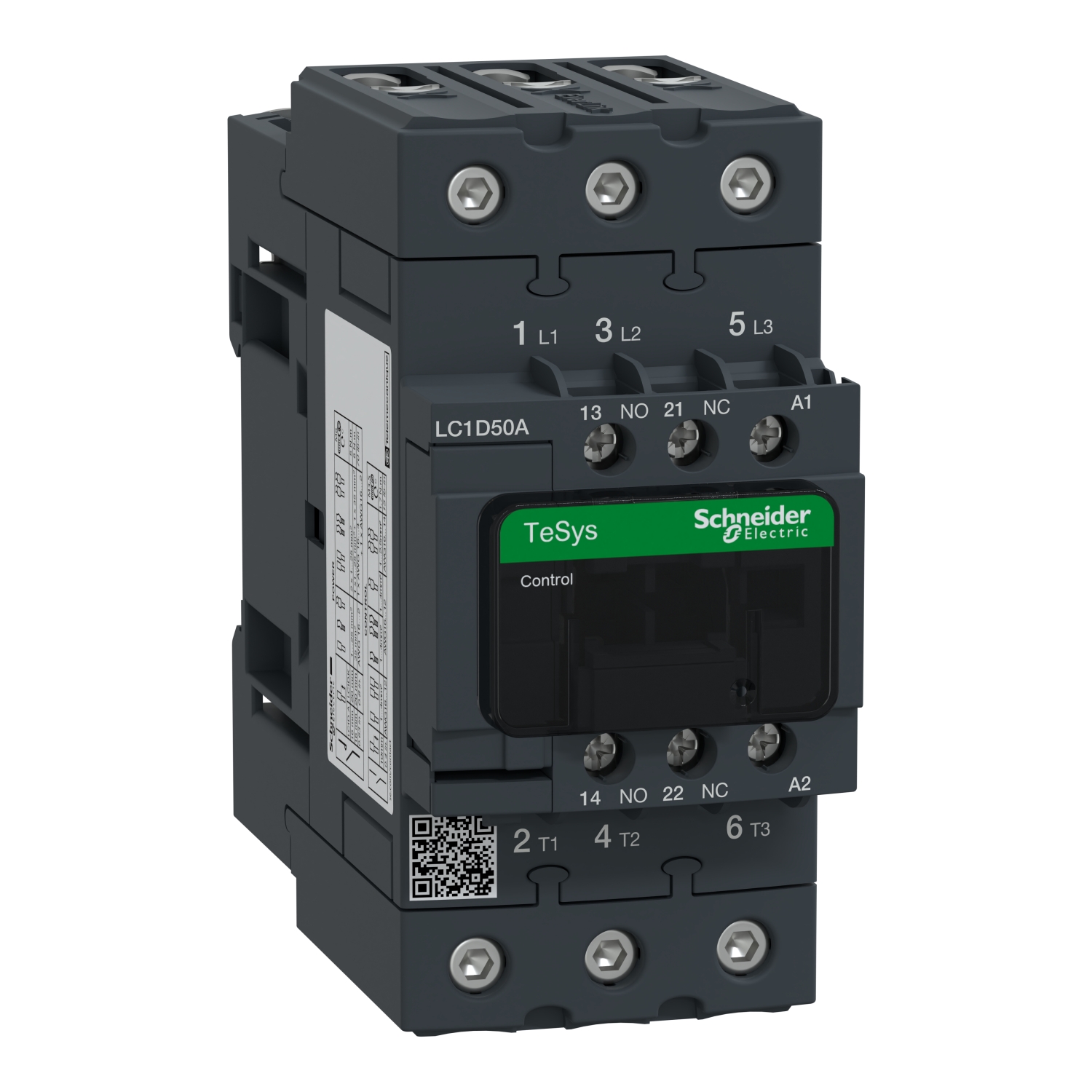
Schneider LC1D50AE7 Contactor | TeSys D- 3P(3 NO) – AC-3 – <= 440 V 50 A – 48 V AC 50/60 Hz coil

In stock
Schneider LC1D50AE7 Contactor
6,046.74 EGP 9,822.52 EGP
In stock
Schneider LC1D50AE7 Contactor: Streamlining Electrical Operations
Introduction to Schneider LC1D50AE7 Contactor
In the realm of electrical engineering, efficiency and reliability are paramount. Schneider Electric, a renowned name in the industry, presents it, a cutting-edge solution designed to streamline electrical operations across various domains.
Overview of Schneider LC1D50AE7 Contactor
Features
it boasts several features that set it apart:
- High operational reliability
- Compact design
- Long electrical and mechanical lifespan
- Wide range of applications
- Easy installation and maintenance
Specifications
- Rated operational current: 50A
- Coil voltage: 24V AC
- Number of poles: 3
- AC control circuit voltage: 50/60Hz
Applications
Industrial Use
In industrial settings, it finds extensive application in controlling motors, pumps, compressors, and conveyor systems. Its robust construction and high performance make it ideal for heavy-duty operations.
Residential Use
In residential setups, this contactor is utilized for various applications such as controlling lighting, heating, ventilation, and air conditioning (HVAC) systems. Its reliability and ease of use make it a preferred choice among homeowners.
Advantages of Using
Efficiency
it ensures efficient power management, thereby optimizing energy consumption and reducing operational costs.
Durability
Constructed with high-quality materials, this contactor is built to withstand harsh environmental conditions and prolonged usage, ensuring long-term reliability.
Safety
Equipped with advanced safety features, including overload protection and arc suppression, it prioritizes user safety and equipment protection.
Installation Guide for Schneider LC1D50AE7 Contactor
Precautions
Before installation, ensure that the power supply is disconnected and all safety protocols are followed. Use appropriate personal protective equipment (PPE) when handling electrical components.
Steps
- Select a suitable location for mounting the contactor, ensuring adequate ventilation and accessibility.
- Connect the control circuit wires to the designated terminals as per the wiring diagram provided.
- Securely fasten the contactor to the mounting surface using appropriate hardware.
- Verify the connections and perform a functional test to ensure proper operation.
Maintenance Tips
Regular Checks
Periodically inspect the contactor for signs of wear, corrosion, or loose connections. Clean the contacts and terminals as needed to maintain optimal performance.
Cleaning
Use a soft, dry cloth to remove dust and debris from the contactor surfaces. Avoid using abrasive materials or solvents that may damage the insulation or contacts.
Troubleshooting Common Issues
Identifying Problems
If the contactor fails to operate or exhibits abnormal behavior, conduct a thorough inspection to identify the root cause of the issue. Check for loose connections, damaged components, or overload conditions.
Solutions
Based on the identified issues, take appropriate measures such as tightening connections, replacing faulty components, or adjusting the load settings. Consult the user manual or seek assistance from a qualified technician if needed.
There are no reviews yet.